In Probably Stolen, I can turn acids, bases, extracts, and other chemical solutions into 100% pure liquids by combining filtration, water purifier tablets, and Gutter Tilapia. In this guide, I explain my step-by-step purification method, the exact water amounts I use, and a few additional tricks for obtaining pure minerals and other contaminants.
How to Get 100% Pure Solutions
My method uses a fish tank and a carefully controlled amount of water to remove chemical contaminants and heavy metals. I then filter out the remaining minerals and evaporate the water to obtain a completely pure solution.
Step-by-Step Purification Guide
Here is the process I follow to get 100% pure acid, base, extract, or chemical solutions in Probably Stolen.
Step 1: Prepare at Least 1 Liter of Solution
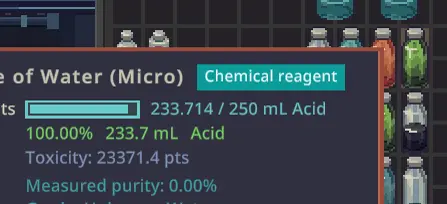
I start with a large, empty bottle and fill it with the solution I want to purify. The important part is having at least 1 liter of liquid before continuing.
If I do not have enough liquid in a single container, I combine multiple bottles of the same acid, base, or other solution until I reach the required amount.
Step 2: Filter Out Minerals and Organic Waste
Next, I pour the solution through a pitcher to remove minerals, organic waste, and other materials that can be filtered out at this stage.
Step 3: Add 1 mL of Pure Water
After filtering, I add exactly 1 mL of pure water to the solution.
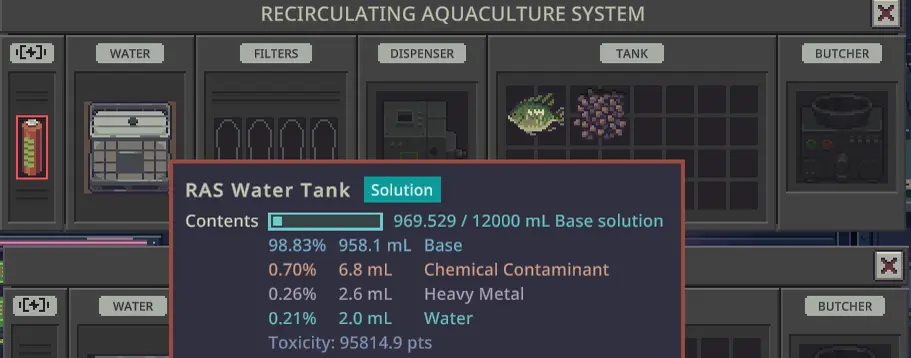
Step 4: Reduce Chemical Contaminants to 0.7%
I use a separate bottle with water purifier tablets to prepare chlorine. Then, I add enough chlorine to the main solution to bring its chemical contaminants down to 0.7%.
- Usually, around 2–3 mL of chlorine is enough.
- The purification process needs water to work. If there is no water present, I add another 1 mL of pure water.
Step 5: Transfer the Solution to a Fish Tank
Once the chemical contaminants reach 0.7%, I transfer the mixture into an empty fish tank and place a Gutter Tilapia inside.
I make sure the tank has power and that the fish has enough food.
I can use multiple fish, but each additional fish requires another 1 liter of liquid. This must be the solution I am purifying, not plain water.
Step 6: Weigh the Fish and Calculate the Water
Before leaving the fish to work, I weigh it to determine exactly how much pure water it needs.
My rule is simple: 0.5 mL of pure water for every 100 grams of fish weight.
This amount is important because the fish needs enough water to survive. If I use too little, the fish might die or fail to purify the solution. If I add too much, some contaminants may remain.
Step 7: Adjust the Water Level in the Tank
After calculating the required water amount, I check how much water is already in the tank and add only enough to reach my target.
If I notice that no water remains after an overnight cycle, I add another 0.5 mL of water as a precaution.
Step 8: Wait Overnight for the Fish to Purify the Solution
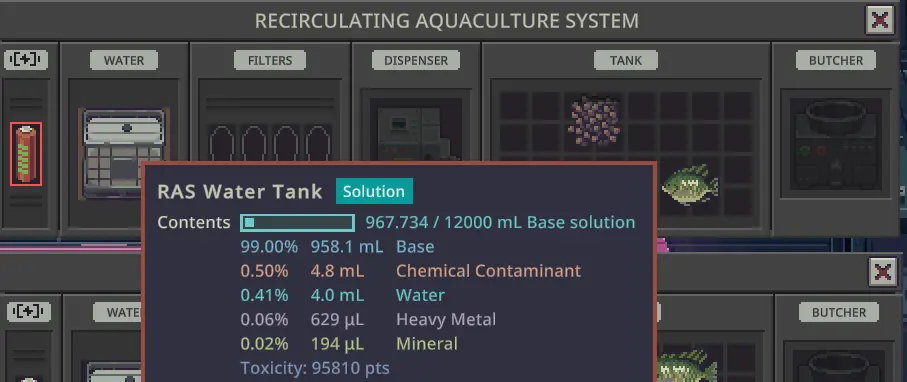
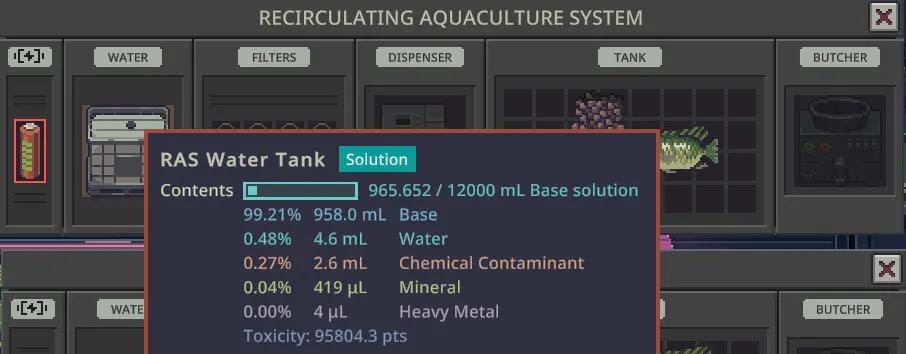
Now I leave the mixture in the tank overnight. The goal is to let the Gutter Tilapia remove the remaining chemical contaminants and heavy metals.
During this process, the water amount in the tank gradually increases.
If tiny amounts of contaminants remain, even at the microliter level, I remove some of the water until I return to the calculated water limit. I do this by boiling or evaporating the excess water.
Step 9: Filter the Solution Again
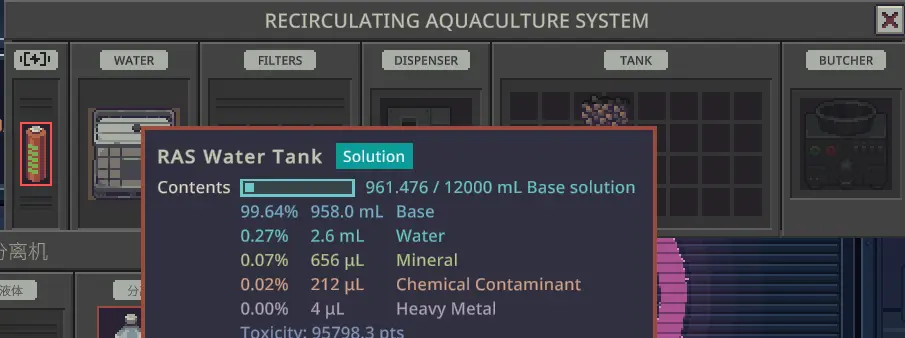
Once the chemical contaminants and heavy metals are gone, I pass the solution through a pitcher again to remove any remaining minerals.
Step 10: Evaporate the Remaining Water
For the final step, I use an evaporator or heating plate to remove the water from the purified mixture.
After the water is gone, I am left with a 100% pure acid, base, extract, or chemical solution, depending on the liquid I started with.
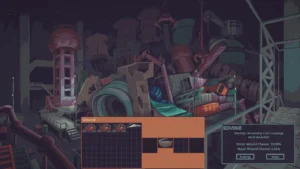
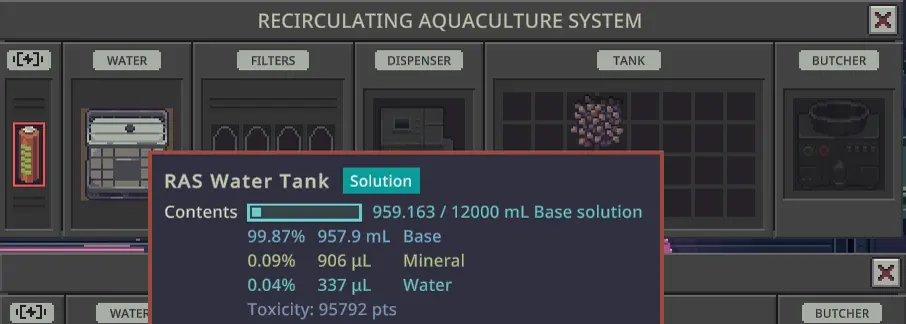
Here are the additional screenshots from the purification process:
Why Does This Purification Method Work?
My best guess is that Probably Stolen has a rounding issue that removes extremely small quantities of contaminants once they fall below a certain threshold.
With 1 mL of water present, the fish can apparently clean a solution down to around 0.02%. The proposed explanation estimates this as 20 microliters. If the game instead considers the entire 1-liter solution, the estimated remaining quantity drops to 0.0020 microliters.
I cannot confirm exactly how the game handles these calculations. It is just a possible explanation for why this method can produce 100% pure solutions.
Secret Tips for Pure Minerals and Contaminants
Besides making pure chemical solutions, I can use similar methods to collect minerals, heavy metals, and chemical contaminants separately.
How I Get Pure Minerals
To collect pure minerals, I start with tap water and boil it using a boiler or evaporator until only minerals, chemical contaminants, and heavy metals remain.
Then, I repeat the same fish purification method described above. This allows me to end up with buckets of pure minerals.
I can also use water reeds beforehand to remove most of the contaminants before transferring the mixture to the fish tank. However, reeds alone cannot reach 100% purity.
Unfortunately, I cannot turn these minerals into nutrient tablets to sell. They are still useful for hydroponics, though.
How I Get Pure Heavy Metals or Chemical Contaminants
For heavy metals or chemical contaminants, I first check the water to make sure it contains only the specific substance I want to isolate.
Once the unwanted components are gone and only the target contaminant remains, I boil away the water.
What Can I Do With These Materials?
I still have not found a useful purpose for the pure heavy metals and chemical contaminants I have collected. I have managed to accumulate quite a lot of them, but I do not know what to do with them yet.
If you have discovered a practical use for these materials, feel free to share it in the comments.
How to Remove Starch, Sugar, and Other Contaminants
So far, I have not found a reliable way to selectively remove starch, sugar, or similar contaminants from a solution in Probably Stolen.
Water reeds can clean around 28% of everything except minerals, and this percentage can be increased with DNA editing.
However, reeds do not solve the problem of selectively removing these contaminants while preserving the solution I want. Continued cleaning can leave me with water instead, and I have not found a way to manipulate that result further.
If you know another method for removing starch, sugar, or other contaminants without losing the desired solution, let me know in the comments.