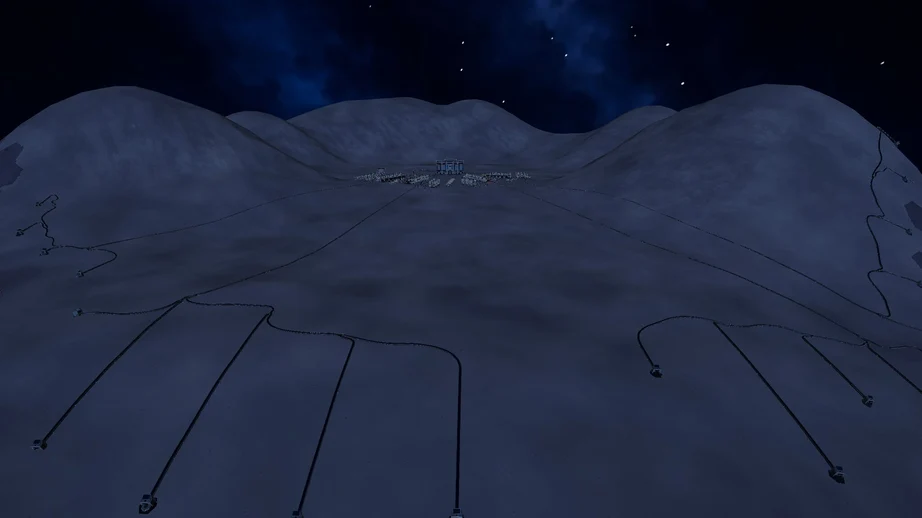
Finding flags, survey sites, and stations in Moon Sweepers is mostly a matter of knowing what to look for. In this guide, I’ll explain how I identify flagpoles, complete site surveys, and navigate toward stations without spending all my time examining the same rocks.
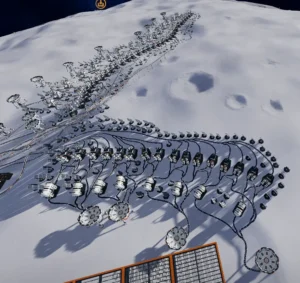
How to Find Flags, Sites & Stations
Exploring the Moon sounds complicated, but my approach is surprisingly simple: look around, move toward anything interesting, and interact with the right objects. Here’s everything I need to know about finding flags, surveying sites, and locating stations in Moon Sweepers.
1. What I Need Before Exploring
Before I begin my lunar expedition, I make sure I have the essential equipment. Fortunately, the requirements are not particularly demanding.
- Eyes, or something that performs a similar function.
- The ability to walk toward whatever catches my attention.
- Access to the E key.
- Enough self-control to stop sweeping for a moment.
Once I’ve checked everything off that list, I head outside and take a look at my surroundings. That’s it. I’ve officially started exploring the Moon.
2. How to Find and Reveal Flags in Moon Sweepers
When I’m searching for flags in Moon Sweepers, I start by looking for poles sticking out of the lunar surface. They’re usually worth investigating, especially when everything around them looks like another rock.
How I Reveal a Flag
Once I find a likely flagpole, I walk up to it and look for the interaction prompt. I then hold E to reveal the flag and keep the key pressed until the interaction is complete.
Congratulations to me. I’ve successfully performed international relations using a keyboard.
How I Recognize a Flagpole
If I’m not sure whether I’ve found the correct object, I use this highly scientific identification checklist:
- Is it tall? That’s a good beginning.
- Is it narrow? Even more encouraging.
- Does it extend upward from the ground? My investigation is progressing nicely.
- Does it display a flag interaction prompt? Mystery solved. I’ve found a flagpole.
I repeat this process whenever I encounter another promising pole. If I’m still having trouble recognizing one, the image below provides some extremely subtle visual assistance.
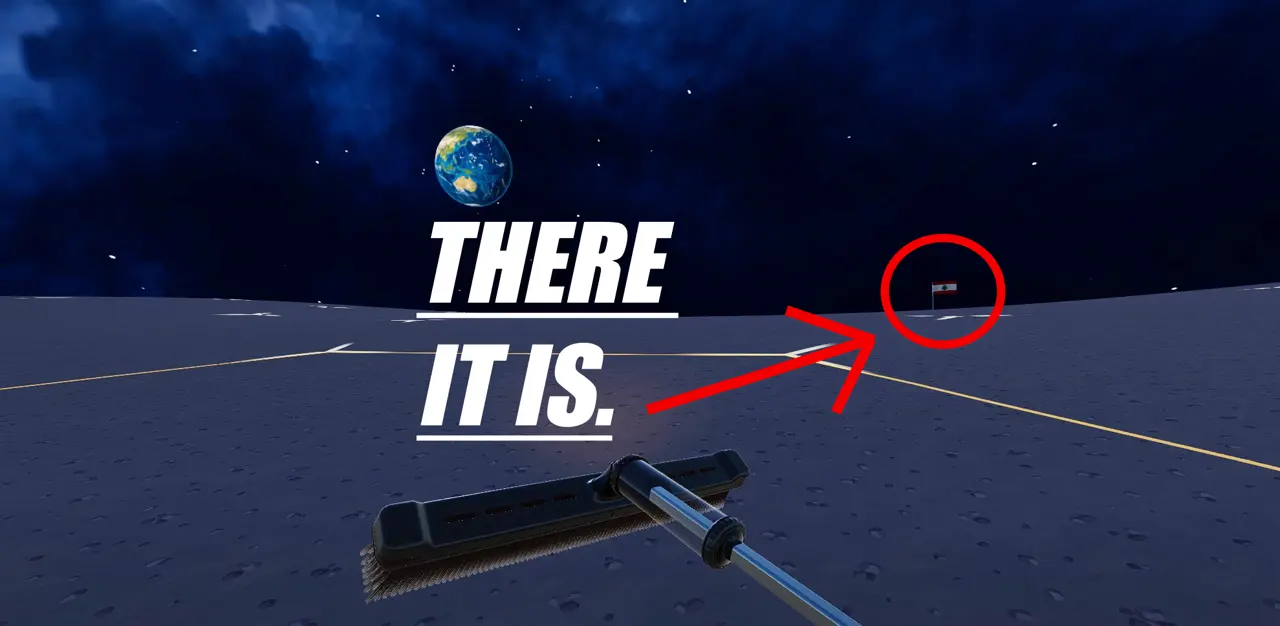
Still can’t locate the flag? I recommend examining the object surrounded by the enormous red circle. It’s a remarkably effective clue.
3. How to Find and Survey Sites in Moon Sweepers
When I’m looking for survey sites, I pay attention to landing equipment and objects that don’t appear to belong naturally on the Moon.
Most of the lunar landscape consists of rocks. If I encounter something with landing legs, however, I consider that an excellent reason to investigate.
How I Complete a Site Survey
Once I’ve located a site, I approach it and search for the survey interaction prompt. I complete that interaction to finish surveying the site.
Simply standing nearby and admiring the equipment doesn’t count. I actually need to complete the survey, no matter how thoroughly I’ve inspected everything with my eyes.
And just like that, I’ve become a qualified lunar archaeologist. My credentials consist of arriving at a location and interacting with something.
4. How to Find Stations in Moon Sweepers
Finding stations is another important part of exploring the Moon. My preferred method is to look for an actual station, although I admit that this strategy sounds more impressive on paper.
For a more reliable approach, I check my compass for station icons. When I spot one, I follow its direction and continue moving until I reach the station.
If I eventually arrive at a station, I know my navigation worked. If I end up staring at another rock, it’s probably time to reconsider my direction.
My navigation tip: I try to remember where I came from. Saying that my starting point is somewhere behind me becomes increasingly unhelpful after I’ve turned around several times.
5. Exploration Tips for Finding Objects on the Moon
After mastering the ability to look straight ahead, I move on to a surprisingly useful exploration technique: turning around.
It turns out that an entire section of the Moon can exist behind me, even when I’m not looking at it. An extraordinary discovery.
My Tips for Searching More Effectively
When I’m struggling to locate flags, sites, or stations, these are the techniques I use:
- Look around while moving: I cover more ground when I explore and observe my surroundings at the same time.
- Watch the horizon: I look for small silhouettes in the distance instead of focusing entirely on my broom.
- Change direction: If I’ve examined the same rock repeatedly, I accept that it probably has nothing new to offer.
- Explore during daylight: I find objects easier to recognize when there’s enough light to see them.
- Spread out with friends: When exploring in a group, I prefer having everyone search different areas instead of following one person around.
I can combine all these methods whenever I need to expand my search. The hardest part is remembering to look somewhere other than the exact place I’ve already checked.
6. Moon Sweepers Flags and Survey Sites Troubleshooting
Sometimes I can spend quite a while exploring without making much progress. When that happens, I run through a few common problems before deciding that the Moon is personally hiding things from me.
I Can’t Find Any Flagpoles
I keep exploring and looking in different directions. Unfortunately, staring at an empty landscape doesn’t cause a flagpole to appear.
I Found a Pole, but Nothing Happens
First, I move closer and check for the interaction prompt. If it’s there, I hold E until the flag interaction finishes.
If I can’t find a prompt at all, I consider the possibility that I’ve been enthusiastically investigating an ordinary pole rather than a flagpole.
I Found a Survey Site, but It Didn’t Count
I make sure I actually completed the survey interaction. Reaching the location is only part of the process. Looking at the site and deciding that it seems interesting isn’t enough.
I Still Don’t Know Where to Search
Everything I’m searching for is somewhere on the Moon. While that doesn’t provide an exact location, it does eliminate a considerable number of other celestial bodies.
If I’ve spent twenty minutes finding absolutely nothing, I try a different direction instead of continuing to inspect the same area.
My Friend Is Just Driving Around
Technically, they’re exploring. I may not approve of their contribution to our search, but I can’t entirely argue with their methods.
That’s everything I need to know. I can now confidently look around, walk toward objects, and occasionally hold a button. My unofficial certification in lunar object identification is well deserved.
If this Moon Sweepers guide helped you find a flag, survey a site, or locate a station, consider sharing it with another explorer who might still be examining the same rock. Training complete. My qualifications are valid on the Moon, recognized by approximately nobody, and earned entirely through the advanced art of paying attention.
Now I’d better get back to sweeping. The Moon isn’t going to clean itself.